Joseph Hudson
 In the dazzling world of diamonds, the emergence of lab-grown diamonds has reshaped the landscape of luxury and ethics. Once only available through natural mining, diamonds are now being cultivated in laboratories with remarkable precision. But how do these lab-grown diamonds stack up against real (natural) diamonds? Are they truly identical, or are there significant differences that buyers should consider?
This guide explores the key distinctions between lab-grown and natural diamonds in terms of composition, value, environmental impact, appearance, and more.
What Are Lab-Grown Diamonds?
Lab-grown diamonds, also known as synthetic or man-made diamonds, are created using advanced technological processes in a controlled environment. They are developed through two primary methods:
-
High Pressure High Temperature (HPHT): Mimics the natural process of diamond formation using intense heat and pressure.
-
Chemical Vapor Deposition (CVD): A carbon-rich gas is used to grow the diamond layer by layer.
These lab techniques produce diamonds that are chemically, physically, and optically identical to natural diamonds.
What Are Real Diamonds?
Real diamonds, also known as natural diamonds, are formed deep within the Earth’s mantle under extreme heat and pressure over billions of years. They are then brought to the surface through volcanic eruptions and mined using various techniques.
Because of their natural origin, each diamond carries a unique geological story—often associated with rarity and value.
Lab-Grown Diamonds vs Real Diamonds: Key Differences
Let’s break down the differences between the two types across various factors.
1. Origin
-
Lab-Grown Diamonds: Created in laboratories in weeks.
-
Real Diamonds: Formed naturally over billions of years.
Key Takeaway: Lab-grown diamonds offer a modern, technological alternative, while real diamonds connect you to Earth’s ancient processes.
2. Appearance
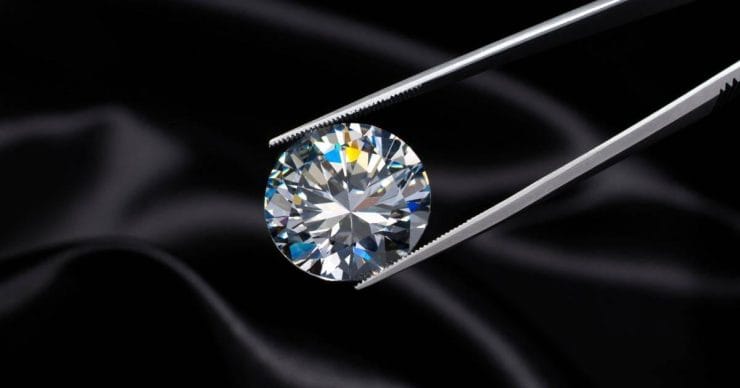
To the naked eye, both lab-grown diamonds vs real and natural diamonds are indistinguishable. They are graded using the same criteria—cut, color, clarity, and carat (4Cs). Only highly specialized equipment can detect their origin.
Key Takeaway: Visually, there is no difference. Both sparkle equally and can be cut into any shape.
3. Chemical & Physical Properties
-
Lab-Grown Diamonds: Have the same carbon crystal structure and hardness (10 on the Mohs scale).
-
Natural Diamonds: Also have the same structure and hardness.
Key Takeaway: From a scientific standpoint, both are real diamonds.
4. Price
-
Lab-Grown Diamonds: Typically 30–50% cheaper than natural diamonds of the same specifications.
-
Natural Diamonds: Carry a premium due to their rarity and mined origin.
Example: A 1-carat lab-grown diamond may cost around $2,000, while a similar natural diamond could be $5,000 or more.
Key Takeaway: Lab diamonds offer significant cost savings without compromising beauty.
5. Environmental Impact
-
Lab-Grown Diamonds: Require less land and water, and create fewer emissions. However, the process is not carbon-neutral, especially in older HPHT systems.
-
Natural Diamonds: Mining can lead to deforestation, water pollution, and habitat destruction.
Key Takeaway: Lab-grown diamonds are generally more environmentally friendly.
6. Ethics & Sourcing
-
Lab-Grown Diamonds: Free from conflict, child labor, or exploitation.
-
Natural Diamonds: While the industry has improved, “blood diamonds” (mined in war zones and sold to finance conflict) remain a concern.
Key Takeaway: Lab-grown diamonds offer peace of mind for ethically conscious consumers.
7. Resale Value & Investment
-
Lab-Grown Diamonds: Currently have low resale value, as the supply is more easily controlled and less scarce.
-
Natural Diamonds: Hold value better and are often seen as long-term investments.
Key Takeaway: For investment, natural diamonds are still preferred. For personal use, lab diamonds offer excellent value.
Pros and Cons Summary
| Feature | Lab-Grown Diamonds | Real (Natural) Diamonds |
|---|---|---|
| Appearance | Identical | Identical |
| Origin | Lab-created | Earth-formed |
| Cost | Lower | Higher |
| Environmental Impact | Lower (but not zero) | Higher |
| Ethical Sourcing | Conflict-free | May involve ethical concerns |
| Resale/Investment Value | Lower | Higher |
| Time to Produce | Weeks | Billions of years |
How to Tell the Difference?
Only trained gemologists using advanced tools (like spectroscopy or UV fluorescence testing) can differentiate between lab-grown and natural diamonds. Trusted labs such as GIA (Gemological Institute of America) or IGI (International Gemological Institute) will specify the origin on the certificate.
Tip: Always ask for a grading report before purchasing.